



Perre Ancient City, located in today’s Adıyaman province of Türkiye, is one of the most fascinating archaeological treasures of Southeastern Anatolia. Despite its extraordinary past, most travellers still overlook it, choosing more famous sites like Göbeklitepe or Nemrut. Yet Perre quietly preserves layers of Roman, Byzantine and even earlier civilisations within its peaceful rocky landscape.
This is a place where carved stone doors whisper stories, and underground rooms reveal how people lived centuries before the modern world even existed. Visiting Perre feels like stepping into a forgotten chapter of Anatolian history — untouched, mysterious and incredibly rich.
Where Ancient Roads Once Connected the Civilisations
Perre was once one of the five major cities of the ancient kingdom of Commagene. Its strategic location made it an important stop on the trade routes that connected Mesopotamia, Syria and Central Anatolia. Travellers, traders and soldiers passed through this city daily, turning it into a lively settlement full of culture and commerce.
The Romans later strengthened Perre, adding roads, water channels and impressive stone structures. The city continued to thrive during the Byzantine era, showing how strongly it was tied to regional politics and trade networks.
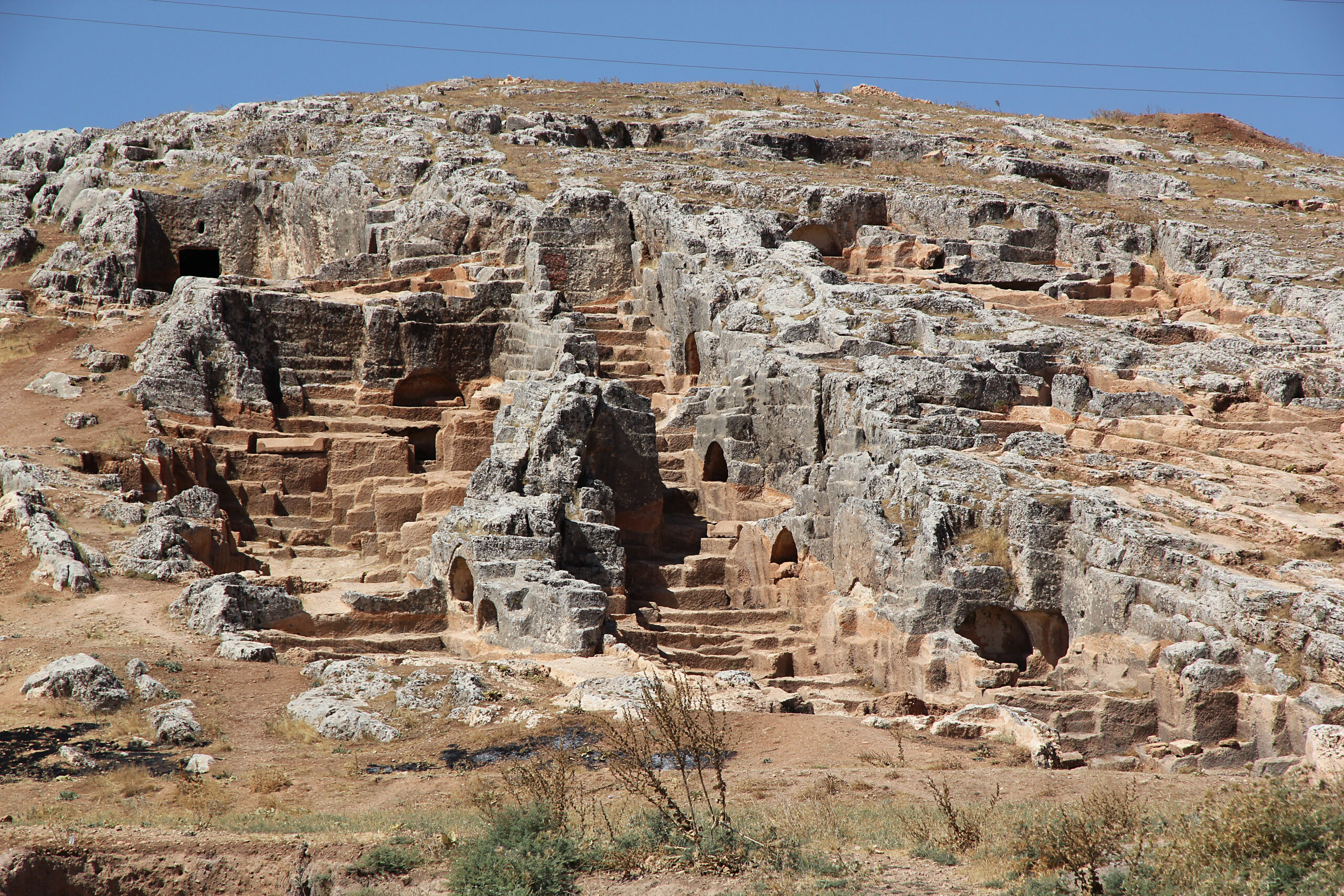
Today, as you walk through the archaeological site, you can still recognize the remains of streets, tombs and carved dwellings that once belonged to this bustling ancient centre.
The Most Striking Feature: Its Rock-Cut Necropolis
One of the most impressive aspects of Perre is its large rock-cut necropolis. The ancient population carved hundreds of tombs directly into the limestone hills. These tombs vary from simple chambers to multi-room burial complexes with intricate reliefs and stone doors.
Some tombs even have square or round openings that allowed family members to visit the deceased again and again. Unlike many other ancient grave sites, Perre’s necropolis is still remarkably well preserved, giving visitors a rare chance to see funerary architecture up close.
Walking among these tombs, you immediately feel the peaceful silence of a place where life and death were deeply connected to the natural landscape.
Ancient Water Systems That Still Impress Engineers
Another fascinating highlight is the city’s ancient water system. Perre had a reliable natural spring, and the Romans constructed clever channels to distribute water throughout the settlement.
Archaeologists have found steps carved into the rock, allowing people to reach water even in dry seasons. This engineering shows the intelligence and foresight behind ancient Anatolian urban planning.
The water system is one of the reasons Perre survived through so many centuries — a reminder that access to water shaped civilisation long before electricity or modern technology.
Life in Perre: How Ancient People Lived
Researchers believe that Perre was a thriving urban centre with markets, workshops, holy areas and residential quarters. The layout of the tombs suggests that families of different statuses lived here — officials, soldiers, and merchants alongside ordinary citizens.
The city was probably filled with the aroma of baked bread, the sound of metalworkers hammering tools, and merchants selling goods from distant regions. Being on a trade route meant Perre was influenced by many cultures: Persian, Roman, Greek and local Commagene traditions.
Even today, when you stand among its ruins, you can easily imagine the daily life that once filled these rocky lanes.
Perre and the Kingdom of Commagene
Perre’s identity is deeply tied to the ancient Commagene kingdom, famous for Mount Nemrut. The kingdom was known for blending Eastern and Western influences, a dynamic visible in Perre’s art and architecture.
While Nemrut features massive stone statues, Perre offers a quieter, more intimate look into the kingdom’s past. Here you see how ordinary people lived — not just how kings ruled. Perre also served as a supply stop for travellers heading toward important Commagene sites, making it a valuable rest point in the region.
Recent Excavations and What They Reveal
In recent years, archaeologists have continued excavations in Perre, uncovering new tombs, pottery pieces, food remains and architectural details that reveal how the city evolved over time. Each newly discovered chamber adds another piece to the historical puzzle.
What makes Perre especially exciting is that only a small part of the city has been excavated. Much of it still lies underground, waiting to be discovered. This means the future may bring new surprises — maybe even temples, workshops or residential buildings that will change what we know about ancient Anatolia.
Why Perre Is Still Underrated
Despite its beauty and historical importance, Perre is still quiet compared to many archaeological attractions. This actually makes it perfect for travellers who prefer peaceful, uncrowded places.
You can walk among the tombs without rush, take wide photographs of natural rock formations, and reflect on countless centuries of civilisation without noise. The site offers a rare combination of open-air museum, natural landscape, and ancient city — all in one visit.
Its underrated status also means the government continues restoration slowly, preserving the site’s authenticity rather than adding modern reconstructions.
How to Experience Perre at Its Best
If you plan to explore Perre Ancient City, go early in the morning or before sunset for the best lighting. The soft golden colours make the carved rocks glow, adding an almost magical quality to every photograph.
Wear comfortable shoes, bring water, and prepare for light uphill walking. Because the area is open, you can freely move from one chamber to another, discovering new carvings, narrow openings and ancient pathways at your own pace.
A visit to Mount Nemrut or Adıyaman Museum combines beautifully with Perre if you want a full historical journey.
A Reminder of How Civilisations Come and Go
Standing among the carved stone chambers of Perre, you realize how many generations lived, dreamed, worked and died here. The city is a timeless reminder that civilisations are powerful but fragile. What remains today are the stones they shaped and the stories they left behind.
Perre is not just an archaeological site — it is a memory preserved in rock. Every tomb, channel and passageway speaks about human resilience and creativity.
Why You Should Add Perre to Your Travel List
If you enjoy history, archaeology or hidden destinations, Perre Ancient City should be on your travel map. It’s less crowded, incredibly atmospheric, and rich with stories. Whether you’re a photographer, a cultural explorer, or someone seeking peaceful historic places, Perre offers something meaningful.